

Curious About HRT? What to Expect at Your First Visit
If you’re considering hormone replacement therapy for perimenopause or menopause, here’s how to prepare for a productive first visit.
Curious About HRT? What to Expect at Your First Visit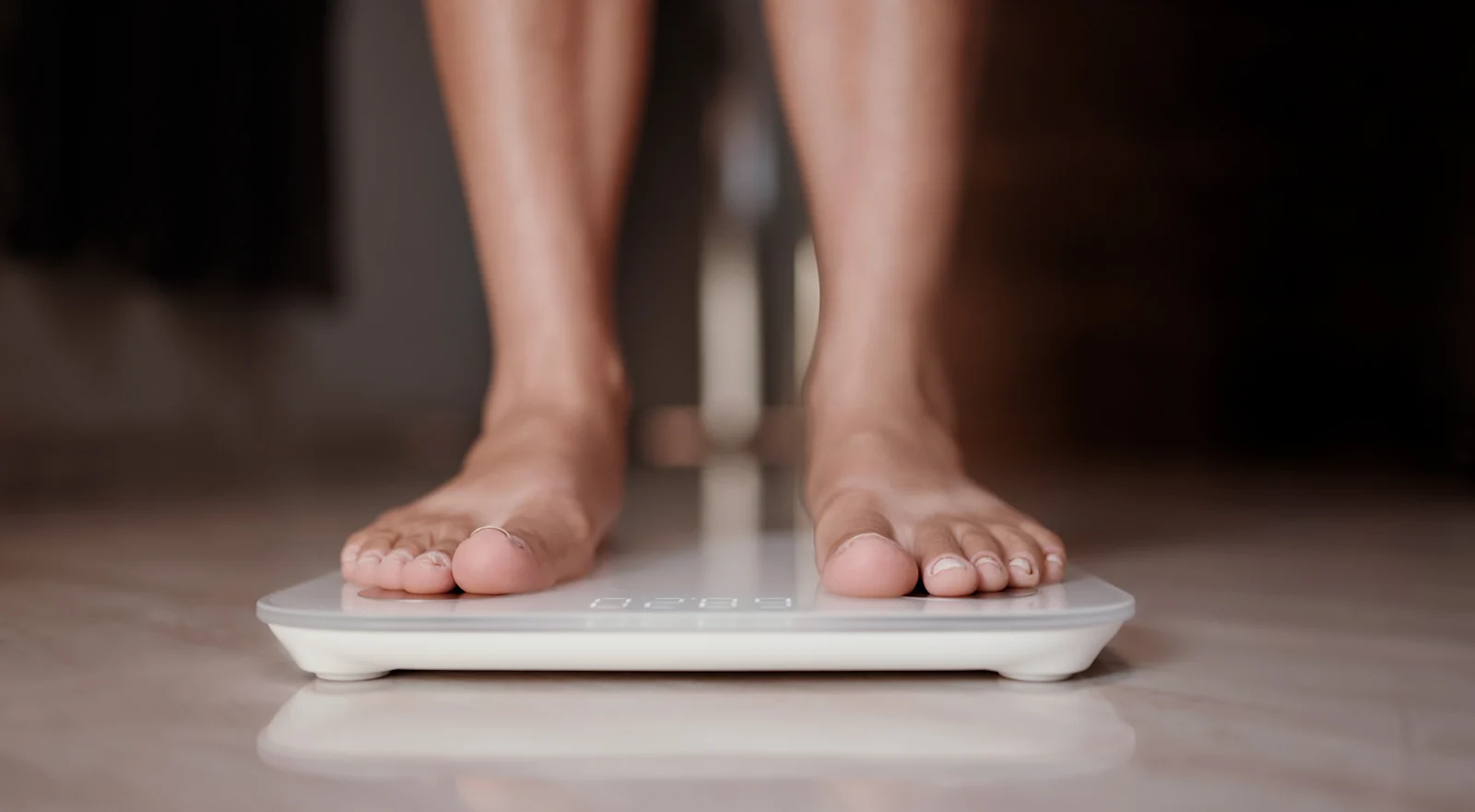
Revised on Oct. 23, 2026
If you’re starting hormone replacement therapy, you may be wondering when you’ll notice a change in your weight.
There is no established timeline for losing weight on HRT because menopausal hormone therapy is not a weight-loss treatment. It can help relieve certain menopause symptoms, but it has not been shown to cause weight loss on its own.
Understanding the relationship between HRT and weight loss can help you set realistic expectations. At Allure, we believe hormone care and weight management should be coordinated around your symptoms, health history, and individual goals.
Menopause weight gain usually involves more than one factor. Hormonal changes can influence where your body stores fat, while aging, changes in muscle mass, physical activity, nutrition, and sleep can affect overall weight.
You may notice your waistline changing even when the number on the scale stays relatively steady. Declining estrogen levels are associated with a shift toward storing more fat around the abdomen.
This is why a useful weight management plan looks beyond hormones alone. Your provider may also review your medications, sleep concerns, daily habits, and possible underlying health conditions.
HRT is used primarily to treat bothersome menopause symptoms, such as hot flashes, night sweats, and vaginal symptoms. Certain forms also help protect against bone loss. It should be prescribed based on those needs and an individualized assessment of benefits and risks.
For someone whose night sweats disrupt sleep, symptom relief may make daily routines feel more manageable. That can be helpful when working on nutrition and activity goals. However, feeling better after starting HRT does not mean the treatment will directly cause fat loss.
Hormone therapy may influence abdominal fat distribution, but that is different from producing a predictable reduction in body weight.
It helps to separate two questions: whether HRT is improving menopause symptoms and whether your weight management plan is working.
Some menopause symptoms may improve within days or weeks, while the full effect of treatment can take up to three months. A review around three months is a common opportunity to discuss symptom relief, side effects, and possible adjustments. This is a symptom-treatment timeline, not a weight-loss timeline.
Changes in body weight depend on the overall plan, including nutrition, activity, health conditions, and any appropriate weight-management treatment.
Rather than expecting a certain number of pounds lost after starting HRT, work with your provider to establish separate goals for symptom relief and weight management. Review trends over time instead of judging progress by an isolated weigh-in.
Body weight is one useful measurement, but it does not capture every treatment goal.
Depending on your needs, your care plan may track:
Waist measurements and how clothing fits.
Strength and physical function.
Sleep quality and menopause symptoms.
Consistency with nutrition and activity habits.
Blood pressure and relevant laboratory results.
These measures provide context. Better sleep or improved strength can be meaningful progress, even when weight changes are slower than expected.
A personalized plan can address menopause symptoms and weight concerns together while giving each its own treatment goals.
Your provider may help you develop an approach that includes balanced nutrition, resistance exercise, regular movement, and support for sleep. They may also review medications or health conditions that could be contributing to weight changes.
If you meet the criteria for medical weight-loss treatment, that can be discussed separately from the decision to prescribe HRT. Neither treatment should be assumed necessary simply because you are experiencing midlife weight changes.
If menopause symptoms and weight changes are affecting your daily life, a consultation can help you understand your options.
At Allure, your consultation gives your provider time to review your symptoms, goals, health history, and current medications. Together, you can discuss whether HRT, a weight management plan, or a combination of appropriate treatments fits your needs.
There is no established timeline. Menopausal HRT is not a weight-loss treatment, and some people will not lose weight while taking it. Weight changes should be evaluated in the context of your overall nutrition, activity, health, and treatment plan.
Hormone therapy may influence how fat is distributed around the abdomen, but it does not reliably cause weight loss or specifically eliminate belly fat. A broader weight management plan remains important.
There is little evidence that most types of menopausal HRT cause weight gain. Weight changes commonly occur during menopause and with aging, whether or not someone takes HRT. If you notice unexpected changes after starting treatment, discuss them with your provider.
Symptom relief and weight loss are different outcomes. HRT may help with hot flashes or night sweats without lowering your body weight. Your provider can review your weight goals separately and assess other contributing factors.
No. HRT dosing should be guided by the condition being treated, symptom response, and safety—not a weight-loss target. Discuss concerns with your prescribing provider before changing your medication.
Yes. Nutrition and physical activity remain central to weight management during menopause. A plan that includes strength training and sustainable eating habits can support your broader health goals.
A review around three months is common for menopausal HRT, although your provider may recommend a different schedule. Contact them sooner if you develop concerning symptoms or troublesome side effects.
A consultation can help clarify your treatment goals and identify appropriate next steps. Your provider can assess menopause symptoms, review factors affecting your weight, and discuss a personalized plan with ongoing follow-up.
If you’re considering hormone replacement therapy for perimenopause or menopause, here’s how to prepare for a productive first visit.
Curious About HRT? What to Expect at Your First VisitAllure Medical offers NightLase®, a non-surgical laser treatment designed to address snoring in appropriate candidates. NightLase® uses controlled laser energy to heat oral soft tissues, promoting collagen remodeling and tissue tightening. Treatment is performed in a series of office visits. The recommended schedule depends on your evaluation and treatment plan.
Sleep Apnea: Symptoms, Causes, and Treatment Options with NightLase®An effective anti-aging skincare routine doesn’t need a shelf full of products. The goal is to choose ingredients that address your concerns, suit your skin, and fit into a routine you can maintain.
A Simple Anti-Aging Skincare Routine for Healthier-Looking Skin