
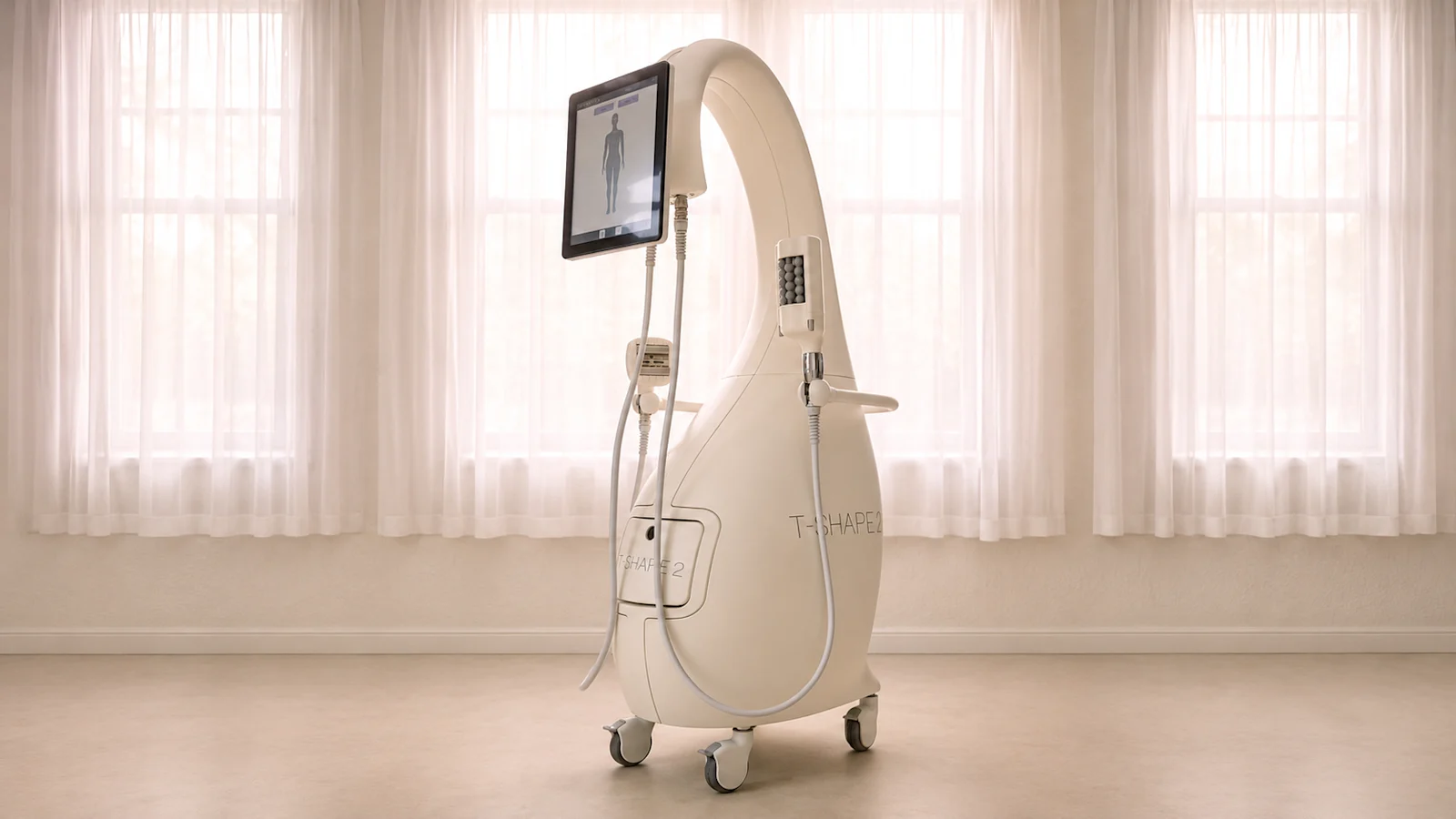
T-Shape 2: What to Know About Noninvasive Cellulite Treatment
T-shape 2 applies energy and stimulation to help improve the appearance of cellulite without surgery.
T-Shape 2: What to Know About Noninvasive Cellulite Treatment
When joint pain makes stairs, walks, or time with your family more difficult, it’s natural to look for treatment options that fit your life. You may have heard about platelet-rich plasma, or PRP, and wondered whether it could help.
If you’re researching PRP treatment in Shelby Township, you may also encounter platelet-rich fibrin, or PRF. Both are prepared from your own blood, but they are not identical.
At Allure Medical, we use PRF for our platelet-based treatments, although you may see both terms used on our website. Understanding the difference is a useful first step toward an informed consultation.
Platelet-rich plasma is a preparation made from a patient’s blood that contains concentrated platelets. Platelets are cell fragments involved in clotting and carry growth factors that participate in the body’s repair processes.
PRP injections deliver this preparation to a targeted area. Researchers have studied their use for certain tendon problems and knee osteoarthritis, among other orthopedic conditions.
The goal is to improve symptoms and function in appropriately selected patients. Results depend on the condition, the preparation used, and individual patient factors.
Platelet-rich fibrin is another blood-derived platelet preparation. Its fibrin structure helps distinguish it from other platelet concentrates.
Fibrin is a protein involved in clot formation. In PRF preparations, it can provide a network associated with platelets and growth factors. Preparation methods and cellular composition vary across platelet products, which is one reason their names should not be treated as interchangeable.
PRF has attracted interest for its biological properties, but it should not automatically be described as clinically superior to PRP for every joint or tendon condition. Research findings vary, and preparation protocols can affect outcomes.
During your consultation, ask which preparation your provider recommends and what evidence supports its use for your diagnosis.
Platelet-based treatments may be considered for selected musculoskeletal conditions. However, the evidence differs by diagnosis.
For example, the American Academy of Orthopaedic Surgeons states that PRP may reduce pain and improve function in symptomatic knee osteoarthritis, while grading that recommendation as limited because of concerns about the available evidence.
Research also examines platelet treatments for tendon problems, including tennis elbow. Findings for one condition should not be assumed to apply to every painful joint or injury—or to a different platelet preparation.
An evaluation should begin with identifying the cause of your pain. Knee, shoulder, hip, and hand pain can have different causes that require different approaches.
Improvement in pain is different from proof that cartilage has regrown.
An AAOS review of PRP research for knee osteoarthritis found improvements in some patient-reported outcomes, but the studies addressing cartilage structure did not demonstrate structural improvement. Platelet injections should not be presented as a guaranteed way to rebuild a worn joint or reverse arthritis.
A useful treatment discussion focuses on practical goals, such as walking more comfortably or managing daily activities, alongside the limits of the evidence.
At Allure Medical in Shelby Township, your first step is a consultation to discuss your concerns and determine whether a platelet-based approach is medically appropriate.
Come prepared to discuss:
Where you feel pain and how long it has been present.
Activities that make symptoms better or worse.
Previous treatments and how well they worked.
Relevant medical history and current medications.
What you hope to do more comfortably.
Ask how the proposed treatment compares with other options, how progress will be measured, and what the next step would be if you do not improve.
Platelet-based treatment generally begins with a blood draw. The blood is processed to prepare the platelet concentrate, which is then administered to the selected treatment area.
The details depend on the preparation and the condition being treated. Before proceeding, ask your clinician to explain the injection process, comfort measures, aftercare, and recommended follow-up.
Allure Medical’s treatment page states that the practice uses PRF, although PRP and PRF terminology may both appear in its materials. Your provider can explain the specific preparation recommended for you.
No. PRF is a platelet-based blood preparation. It is not the same as a treatment using stem cells collected from bone marrow, fat, or donor tissue. These approaches should be discussed separately because their composition, evidence, and regulatory considerations differ.
Allure’s page describes a series of three sessions as a common approach. Your recommended number and spacing of appointments should depend on your evaluation. Ask when your response will be reassessed before committing to a treatment package.
There is no guaranteed duration. Some PRP studies in knee osteoarthritis have reported benefits lasting up to two years, but that does not predict an individual outcome or establish the same duration for PRF. Ask what expectations are reasonable for your condition and treatment plan.
Yes. PRP injections can cause increased pain at the injection site. Other injection-related risks include infection and tissue or nerve injury. Using your own blood does not make a procedure risk-free. Discuss the risks of the specific PRF preparation and injection recommended for you.
They should not be promised as a replacement for surgery. Some patients explore orthobiologic treatments as part of nonsurgical care, but whether they are appropriate depends on the diagnosis and severity of the condition. A consultation should include discussion of established alternatives.
Allure Medical does not list a fixed PRF price on this treatment page. The practice offers consultations to discuss current pricing and packages. Request an estimate that explains the recommended sessions, any additional treatments, and follow-up costs.
Start with an evaluation of your symptoms and medical history. Ask your provider to explain the expected benefits, uncertainties, risks, and alternatives for your particular diagnosis. The right plan should reflect your needs and goals.
You deserve a clear explanation of your options when pain begins limiting your daily life.
Allure Medical offers consultations in Shelby Township to discuss platelet-based treatments and whether they fit your individual situation.
Explore PRP and PRF treatment at Allure Medical and request a consultation to discuss your next step.
T-shape 2 applies energy and stimulation to help improve the appearance of cellulite without surgery.
T-Shape 2: What to Know About Noninvasive Cellulite TreatmentAllure Medical offers NightLase®, a non-surgical laser treatment designed to address snoring in appropriate candidates. NightLase® uses controlled laser energy to heat oral soft tissues, promoting collagen remodeling and tissue tightening. Treatment is performed in a series of office visits. The recommended schedule depends on your evaluation and treatment plan.
Sleep Apnea: Symptoms, Causes, and Treatment Options with NightLase®An effective anti-aging skincare routine doesn’t need a shelf full of products. The goal is to choose ingredients that address your concerns, suit your skin, and fit into a routine you can maintain.
A Simple Anti-Aging Skincare Routine for Healthier-Looking Skin